The Stone Age on Öland
After the last ice age, the highest parts of Öland began to rise above the water surface of the Baltic ice lake around 10500 B.C. The climate became warmer, the tundra landscape was followed by pine and birch forests, later also deciduous forests. The first people began to come to Öland. Öland was sparsely populated and small groups of people lived by hunting, fishing and collecting plants.
Uroxe, wild boar, moose and deer were the big game for humans in addition to what was taken from the sea such as seabirds, fish and seals. The people were hunters and gatherers; it was the Older Stone Age, which is considered to end 4000 BC. Thereafter, the time is called the Peasant Stone Age or younger Stone Age or Neolithic, which is considered to end 1800 BC. But the transition from a hunting society to a peasant culture is slow.
The oldest known traces of people on Öland consist of bone harpoons. Such have been found in the parish of Köping, which at this time was located on the northernmost part of the island. The only settlement from the Old Stone Age that has been investigated on Öland is at Alby on southeastern Öland.
During the investigation, about 15,000 flints were found after tool making. Knives, scrapers, arrowheads and drills as well as about 30 bone tips were also found. The material for the tools is the native Ordovician flint. Imports of other materials have not yet begun. It was probably a seasonal fishing and seal hunting spot.
During the Neolithic, which begins in 4000 BC, peasant culture began to mean more and more, even though it reached the Nordic countries already during the Old Stone Age. At first, agriculture was mostly a complement to the old hunting economy.
The people in the Peasant Stone Age were more shepherds than cultivating peasants. The animals kept were cattle, pigs, goats and sheep. The new culture meant greater residency and higher demands on the organization of work. You could get bigger families and bigger material status.
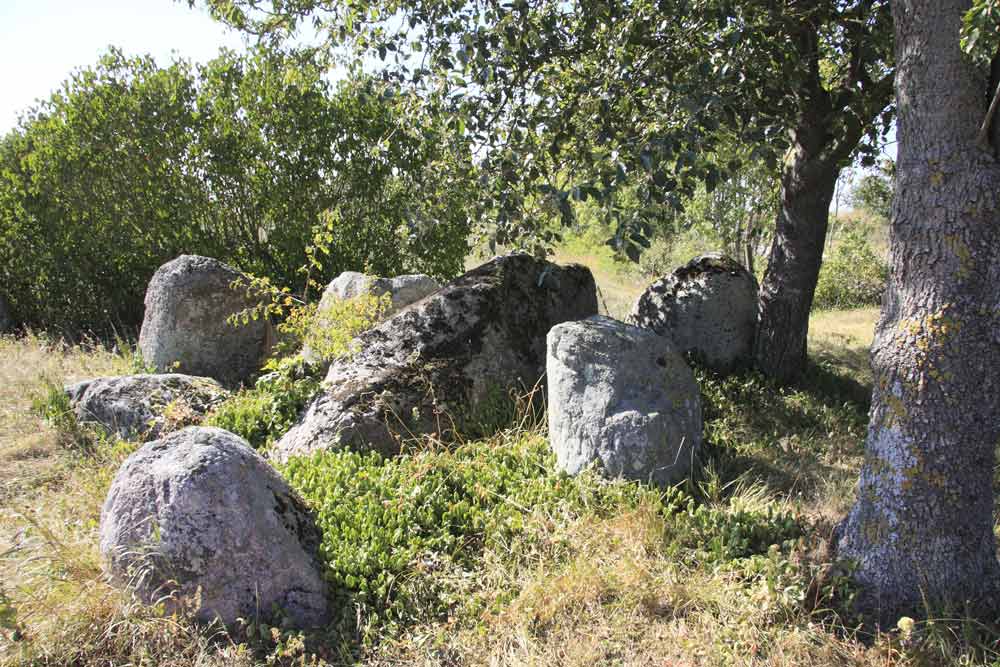
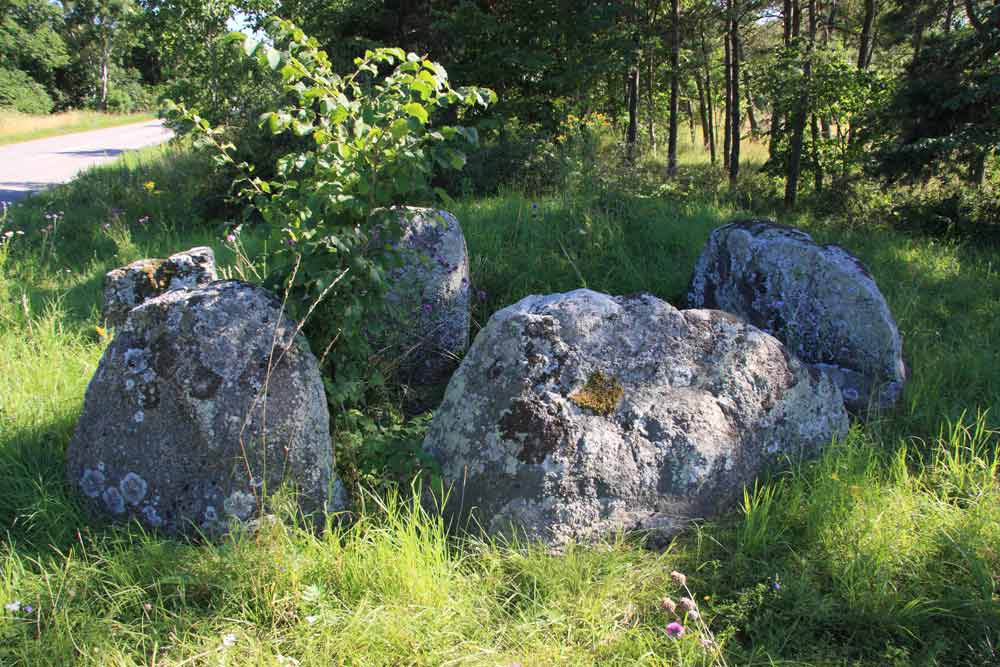
Öland's younger Stone Age is rather little studied. The most famous remains from this time are the four megalithic tombs at Resmo: Resmo gånggrift, Mysine gånggrift 1 and Mysinge gånggrift 2.
These stone chamber tombs belong to the so-called trattbägarkulturen. The graves, together with similar graves in Västergötland and Skåne, belong to a northern outpost of Europe's megalithic graves. Gradually trattbägarkulturen disappears and is replaced by the so-called pit gropkeramiska kulturen, which was a shepherd and fishing culture. At least two settlements on Öland are known from this time.
During the end of the Stone Age, there was a marked increase in population and thus expansion of buildings. Settlements and finds after the so-called stridsyxekulturen have been found over large parts of the island. Core areas appear to have been the coastal plains below Västra Landborgen and the inner parts of the island, often adjacent to wetlands.
Source: County Administrative Board of Kalmar County