Böda ecopark
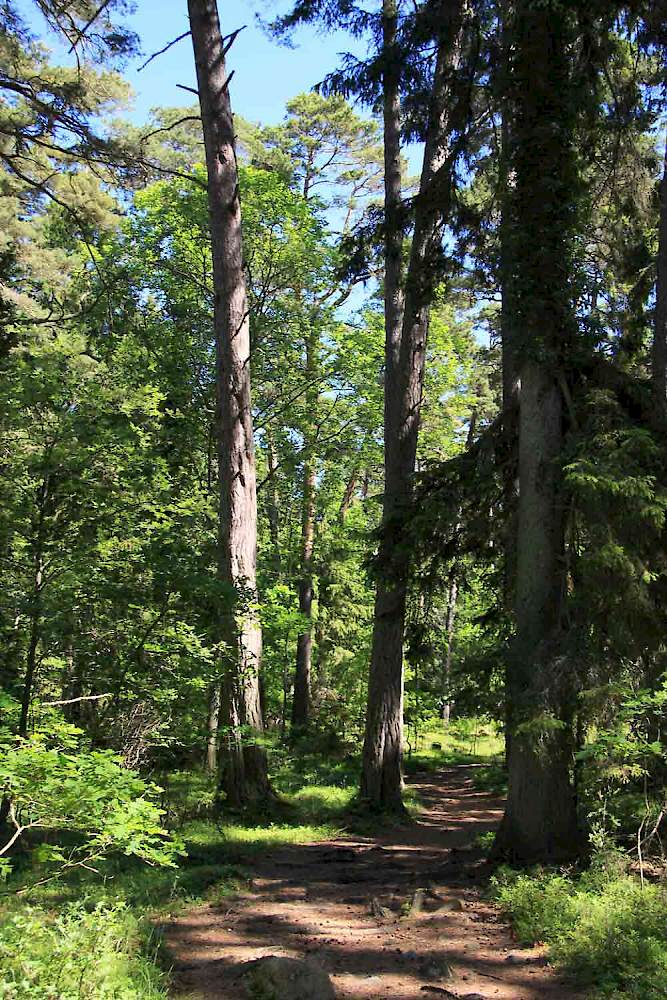
When the whole of Öland as a royal hunting park was abolished in 1801, Böda kronopark remained in the king's possession. Dissatisfaction with the state grew here. The farmers continued to take timber for tar burning, lime burning and house building while the crown's forester increasingly desperately tried to curb the forest thefts. The conflict culminated in 1850 in the so-called Böda uprising. The uprising was crushed and now a new era began in the forest. The state bought Skäftekärr farm and a forest school was established there in 1860. One of the first forester on Skäftekärr was J E Bohman. He started the huge new planting of forest to prevent the flying sand from advancing. Millions of trees were planted and eventually man won over sand mining. Forester Bohman also experimented with alien tree species and an arboretum with over a hundred different tree species is still reminiscent of his time in Böda.
Thanks to the valuable forest landscape with its varied and long cultural history, Sveaskog has chosen to turn large parts of its forest holdings in Böda kronopark into an ecopark to preserve and recreate the unique diversity. Through well-planned nature conservation management, more meadow forest, deciduous forest, wetlands will be created and ancient monuments and cultural monuments will be highlighted. The center of Ekoparken is Skäftekärr. Here is the forester's residence from the 1860s with Öland's only arboretum (140 different trees and shrubs). Grazing animals with Iron Age senses keep the landscape around the Iron Age farm open. Guides, exhibitions and events are arranged at Skäftekärr.